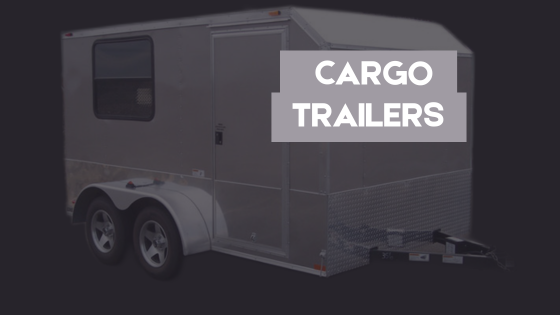
The Hidden Cost Of Choosing The Wrong Hauling Equipment

AutoHome

You lose money every time your equipment fails. A bent axle on a cheap rig doesn’t just cost you repair fees. It costs you a day of work. It costs you client trust. It forces you to rethink your entire operational capacity. Buying a hauling unit based solely on a flashy price tag guarantees failure down the line.

You need reliability. You need absolute certainty that when you load up 7,000 pounds of machinery, your trailer handles it without groaning, bending, or snapping. 65% of buyers rush their purchase. They grab the first unit that looks decent. Six months later, they pay the price in shattered suspensions, blown tires, and missed deadlines.

Stop gambling with your livelihood. Hauling equipment dictates your profit margins. When your trailer sits in the shop, your revenue drops to zero. You need a rock-solid understanding of what you are buying, why you are buying it, and exactly what limits it can handle.

Define Your Core Metrics

Stop guessing. Start measuring. You cannot make an informed purchase until you understand exactly what the numbers stamped on the side of a trailer actually mean. Ignorance here leads directly to overloaded rigs, DOT fines, and catastrophic accidents on the highway.

Gross Vehicle Weight Rating (GVWR) is your absolute ceiling. It represents the maximum allowable weight of the trailer plus everything you load inside it. If you buy a 2026 Stealth Titan 8.5 x 24 Enclosed Car Hauler with a 10,000-pound GVWR, and the trailer weighs 3,500 pounds empty, your payload limit sits exactly at 6,500 pounds. Exceeding that number invites disaster.

Payload capacity dictates your daily operations. This is the exact weight you can legally and safely put onto the deck or inside the box. When you overestimate your payload, you strain the axles. You warp the frame. You ruin your investment.

Axle configuration determines stability and load distribution. A single-axle setup handles light duties like mowers, ATVs, and basic supplies. A tandem-axle setup spreads the weight. It offers superior tracking on the highway. It provides a vital safety net if a tire blows. You don’t choose an axle based on budget. You choose an axle based on the weight you haul every single day.

The Urgency Of Upgrading Now

Inventory evaporates faster than most buyers anticipate. Waiting for a better time to buy leaves you choosing from scraps. Manufacturers face constant pressure from supply chain shifts. Prices adjust upward constantly. The exact unit you need today will definitively cost you more next quarter.

With seven major locations across Michigan – including Edmore, Grayling, Ionia, Monroe, New Boston, Grawn, and Wayland – regional inventory fluctuates daily. A high-demand unit like the 2026 Stealth 7 x 16 Cargo Trailer doesn’t sit on the lot waiting for you to make up your mind. Someone else spots the value, writes the check, and drives off with your competitive advantage.

Old equipment bleeds cash through constant maintenance. You spend more patching up a dying rig than you would financing a brand new 2026 Formula Con Quest. Dealerships with over 50 years in business understand this cycle perfectly. They stock thousands of units specifically because serious operators demand immediate replacements when their old gear inevitably fails.

The Hauling Framework: Matching Load To Equipment

Equipment Category Primary Function Common GVWR Range Specific Market Example
Enclosed Cargo Weather protection, secure tool storage 3,500 – 7,000 lbs 2026 Stealth 6 x 12 ($3,999)
Car Hauler Transporting vehicles, heavy machinery 7,000 – 10,000 lbs 2026 Stealth Titan 8.5 x 24
Landscape & Utility Lawn equipment, bulk materials 3,000 – 7,000 lbs 2026 H&H Aluminum Rail Side
Dump Trailers Hauling debris, aggregate, roofing 10,000 – 14,000 lbs Tandem-axle Hydraulic Dump

What Actually Works For Heavy Lifting

Buying the right equipment demands a ruthless assessment of your daily operations. You do not buy for the best-case scenario. You buy for the worst day on the job. You buy for the day you need to haul maximum weight through miserable weather.

If you haul expensive vehicles, a basic flatbed won’t cut it. You step up to an enclosed car hauler. A 2026 Stealth Titan provides 7 feet of interior height and a completely screwless exterior. The ramp door handles the entry angle perfectly. The 10,000-pound GVWR gives you the capacity to haul without sweating the weigh stations.

For contractors, security equals survival. Leaving tools in an open truck bed invites theft. An enclosed unit transforms into a mobile, secure warehouse. When you secure a 2026 Formula Con Quest 8.5 x 20, you protect your livelihood. You lock the ramp door at night. You sleep knowing your gear remains exactly where you left it.

Landscape professionals require different geometry. You need fast loading, easy tie-downs, and durable decking. An aluminum rail side landscape trailer cuts down on empty weight, allowing you to haul more payload without rusting out after three brutal Michigan winters. You match the trailer entirely to the workflow.

Dump trailers serve as the backbone of serious construction and roofing operations. Shoveling debris out of a truck bed wastes hours of billable time. A hydraulic dump trailer automates the hardest part of the job. You load 10,000 pounds of tear-off shingles, drive to the landfill, and let the hydraulic cylinder do the brutal lifting. The return on investment hits the moment you finish your first job two hours early.

Navigating The Local Market

Typing cargo trailers near me into a search bar usually brings up a chaotic mix of backyard sellers and fly-by-night lots. You end up staring at rusted frames hidden under fresh coats of spray paint. You waste an entire Saturday driving to an empty dirt lot to look at equipment that belongs in a scrapyard.

You need a dealership with a massive physical footprint. USA Trailer operates out of Edmore, Grayling, Ionia, Monroe, New Boston, Grawn, and Wayland. They hold actual, physical inventory. When you walk onto the lot, you compare 50 different units side-by-side. You check the welds. You test the ramp doors. You inspect the wiring harnesses with your own hands.

Professional operations offer fleet sales, massive parts departments, and certified service bays. A guy selling a single unit out of his driveway won’t answer his phone when your leaf springs snap. An established dealer handles warranty claims. They process the financing. They get you back on the road safely and efficiently.

Common Buying Mistakes

Buying on price alone destroys profit margins. Grabbing the cheapest rig saves you $500 upfront and costs you $2,500 in emergency repairs six months later. Cheap trailers feature substandard wiring, flimsy flooring, and paper-thin exterior skin that dents if you look at it wrong.

Ignoring the tow vehicle limits guarantees transmission failure. Your half-ton truck won’t magically pull a fully loaded 14,000-pound dump trailer just because you managed to drop it onto the hitch. You must verify your truck’s exact towing capacity before you look at trailer specs.

Failing to plan for growth forces you into a second purchase. If you buy a 12-foot unit because it fits your current needs perfectly, you shoot yourself in the foot. When your business expands next year, that 12-foot box becomes totally useless. Always buy one size larger than you currently require.

Neglecting bearing maintenance destroys axles entirely. Grease breaks down over time. Bearings dry out. Friction generates massive heat until the entire hub assembly welds itself together at 65 miles per hour. You must repack your bearings annually. Failing to spend $50 on grease ends up costing you $1,500 on a complete axle replacement on the side of the highway.
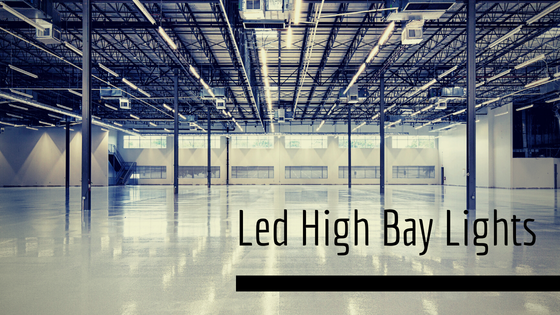
Commercial Led High Bay Lights

Warehouse High Bay Lights

BusinessInternet and Technology

High utility bills and constant maintenance cycles shouldn’t be the price of doing business in a large industrial space. Choosing the right Warehouse High Bay Lights transforms a cavernous, dim room into a high-performance environment where workers see every detail. It’s about more than just visibility. It’s about your bottom line.

Understanding the Mechanics of High Bay Lighting

Ceiling height dictates your choice. If your rafters sit twenty feet or higher above the floor, you need specialized fixtures to push light downward over long distances. Standard shop lights simply scatter their output before it ever reaches your racking or workstations. High bay systems use engineered reflectors or lenses to concentrate that energy exactly where your team needs it most. This precision prevents wasted light on walls or high ceilings.

The shift to LED technology changed everything for facility managers. Older metal halide or high-pressure sodium lamps required massive amounts of power to generate adequate lumens. They also took forever to warm up. Modern LED high bays provide instant illumination the second you flip the switch. They run cooler and last for years without a single bulb change. You save money on energy and labor simultaneously.

Commercial Led High Bay Lights

Consider the beam angle carefully. Narrow angles work perfectly for high-density racking where you need light to penetrate deep into narrow aisles. Wider angles are better for open floor plans or staging areas where uniform coverage is the priority. Most Warehouse High Bay Lights offer interchangeable optics to suit your specific layout. This flexibility ensures your lighting plan evolves as your storage needs change.

Quality matters more than initial price. Investing in high quality commercial LED high bay lights from American Lighting Systems ensures you get durable housing and high-efficiency drivers built for industrial stress. Cheap imports often fail within a year due to heat buildup or poor soldering. A reliable system keeps your operations running without the distraction of dead zones or buzzing ballasts. You want a set-it-and-forget-it solution for your ceiling.

The Different Types of High Bay Fixtures

Shape defines the function. UFO high bays are circular fixtures that resemble their namesake and offer a compact, easy-to-install design. They’re excellent for general area lighting because they distribute light in a wide, even circle. Because they lack bulky reflectors, they accumulate less dust and debris over time. This makes them a favorite for food-grade warehouses or dusty manufacturing plants.

Linear high bays look like traditional fluorescent tubes but pack a much stronger punch. They’re the gold standard for aisle lighting because their long, rectangular shape matches the footprint of your racking. You can mount them directly over the center of the aisle to eliminate shadows on lower shelves. This layout helps pickers read labels faster and reduces errors during fulfillment. It’s a simple way to boost warehouse accuracy.

Vapor-tight fixtures are necessary for harsh environments. If your warehouse deals with high humidity, cold storage, or heavy dust, standard LEDs might corrode or short out. These sealed units protect the sensitive electronics from the elements. They’re tougher than standard models and can withstand spray-downs or extreme temperature shifts. Always check the IP rating before you buy for these specific applications.

Choosing Between Round and Linear Designs

Think about your ceiling grid. Round UFO lights are often easier to swap into existing mounting points if you’re upgrading from old HID lamps. They use a single hook or pendant mount that saves time during a retrofit. Linear fixtures usually require two mounting points or a rail system. While the installation takes longer, the light distribution in narrow spaces is often superior. Match the fixture to your workflow.

Calculating Lumens and Foot-Candles

Brightness isn’t a guess. You must measure the light hitting your floor or work surface in foot-candles to ensure safety and compliance. For general storage, ten to twenty foot-candles might be enough to prevent trips and falls. However, if your team performs detailed assembly or quality control, you might need fifty foot-candles or more. High-output Warehouse High Bay Lights allow you to hit these targets without over-crowding the ceiling with fixtures.

Lumens represent the total light output. A typical high bay might produce anywhere from 15,000 to 40,000 lumens depending on its wattage. High-efficiency models produce more lumens per watt, which is the metric that actually lowers your electric bill. Look for fixtures that offer at least 140 lumens per watt. This efficiency level marks the difference between a budget light and a professional-grade tool.

Don’t forget about light decay. All lights lose some brightness over their lifespan, but LEDs do so much slower than older technologies. A high-quality fixture from American Lighting Systems maintains its brightness for 50,000 to 100,000 hours. This means your facility stays just as bright in year five as it was on day one. Consistent light levels keep your safety ratings high and your employees focused.

Color Temperature and Worker Productivity

Light color affects the brain. Most industrial spaces use 4000K or 5000K color temperatures, which produce a crisp white or cool blue-white light. This spectrum mimics daylight and helps keep workers alert during long shifts. Warmer tones like 3000K can make a large space feel dim or yellowed, which often leads to eye strain and fatigue. Stick to cooler temperatures for maximum clarity.

Color Rendering Index (CRI) is equally vital. CRI measures how accurately a light source reveals the true colors of an object. In a warehouse where workers must distinguish between different colored wires, labels, or fabrics, a high CRI is non-negotiable. Look for a rating of 80 or higher. Low CRI light makes everything look gray or muddy, which increases the risk of shipping mistakes.

Glare control improves comfort significantly. Naked LED chips are incredibly bright and can cause temporary blindness if a worker looks up. Quality Warehouse High Bay Lights use frosted lenses or deep-set reflectors to soften the output. This reduces the harsh “hot spots” that cause headaches and discomfort. A comfortable worker is a productive worker, and your lighting choice plays a massive role in that equation.

Smart Controls and Energy Savings

Stop lighting empty aisles. Motion sensors are the easiest way to slash your energy costs by another 30% to 50%. These sensors dim or turn off the lights when no one is in the immediate area. As soon as a forklift enters the aisle, the Warehouse High Bay Lights snap back to full brightness. This automation ensures you only pay for the light you’re actually using.

Daylight harvesting is another powerful tool. If your warehouse has skylights or large windows, sensors can detect the incoming natural light. The system then automatically dims the artificial lights to maintain a consistent foot-candle level. It’s a sophisticated way to blend natural and electric light seamlessly. You’ll notice the savings on every sunny day.

Integrated dimming gives you total control. Sometimes you don’t need 100% power, especially during inventory counts or off-peak hours. Using 0-10V dimming drivers allows you to tune the environment to the task at hand. It also extends the life of the LED components by reducing heat stress. Smart lighting isn’t just a luxury. It’s a strategic asset for modern facility management.

Installation and Maintenance Best Practices

Safety comes first during any install. High bay lights are heavy and require secure mounting to the building’s structural steel. Always use safety cables as a secondary backup to prevent the fixture from falling if the primary mount fails. Ensure your electrical circuits can handle the total load, even though LEDs draw much less current than the lights they replace. Hiring a licensed industrial electrician is the only way to guarantee a code-compliant setup.

Spacing determines the uniformity of your light. If you place fixtures too far apart, you’ll end up with dark “puddles” between the beams. If they’re too close, you’re wasting money on extra hardware. Professional lighting layouts use software to calculate the exact placement based on your ceiling height and floor goals. This planning phase prevents expensive mistakes and ensures full coverage from wall to wall.

Keep your fixtures clean. Even the best Warehouse High Bay Lights will lose efficiency if they’re covered in a thick layer of warehouse dust. A quick wipe-down during annual inspections can restore lost brightness and help the heat sinks dissipate heat properly. Since LEDs don’t require frequent bulb changes, this simple cleaning is usually the only maintenance you’ll ever need. It’s a small task that protects your long-term investment.

The Financial Impact of Upgrading

Look at the payback period. Most warehouse lighting upgrades pay for themselves in less than two years through energy savings alone. When you factor in the eliminated cost of renting scissor lifts to change dead bulbs, the ROI becomes even more attractive. Many utility companies also offer rebates for switching to certified LED systems. These incentives can cover a significant portion of your upfront hardware costs.

Quality lighting increases property value. If you ever decide to lease or sell your facility, a modern, energy-efficient lighting system is a major selling point. It shows the building has been well-maintained and is ready for high-intensity operations. Prospective tenants love seeing low operating costs baked into the infrastructure. It’s an upgrade that pays dividends now and in the future.

Focus on the total cost of ownership. A cheap light that breaks in eighteen months is far more expensive than a premium fixture that lasts a decade. Brands like American Lighting Systems provide the reliability needed to avoid operational downtime. When your lights stay on, your team stays moving. That’s the ultimate goal of any warehouse infrastructure project.

Transform Your Facility Today

Don’t let poor lighting hold your business back. Upgrading to high-performance Warehouse High Bay Lights is the fastest way to improve safety, accuracy, and energy efficiency. You’ll see the difference the moment the power hits the new fixtures. Your team will work faster. Your electric bill will shrink. Your facility will finally look like the professional operation it is. Contact a lighting specialist today to request a custom photometric layout and start your transition to a brighter, more profitable warehouse.